


Aircraft Seating Linear Motion
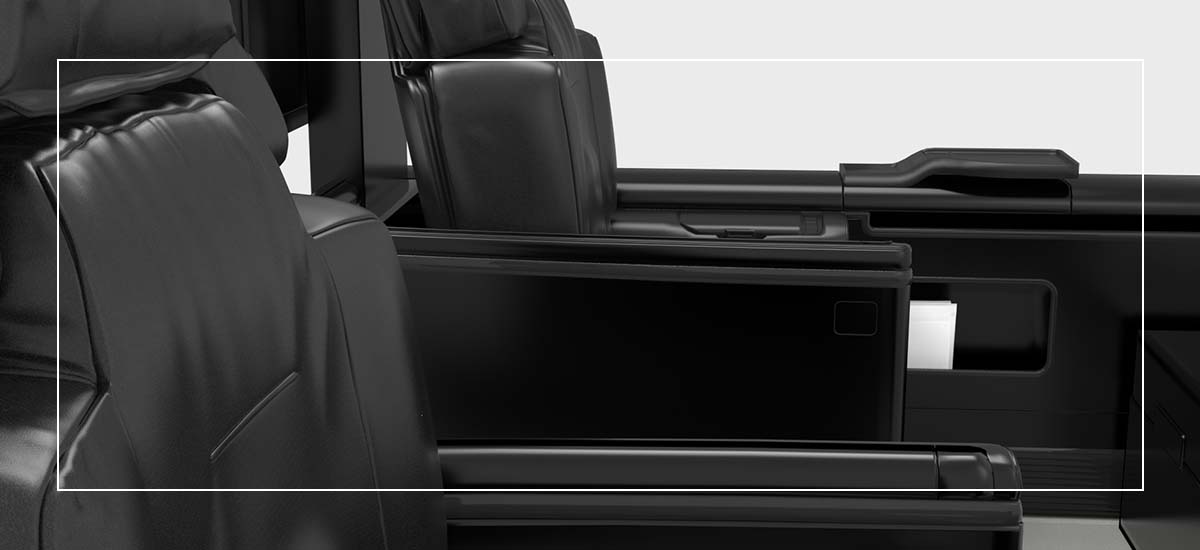
When a business-class seat undergoes 16g dynamic seat slide testing for TSO-C127 certification, every engineering decision faces rigorous validation. The Federal Aviation Administration’s (FAA) pass-or-fail criteria are clear: aircraft seat slide mechanisms either meet the load requirements or they don’t. Achieving this certification confidently demands aerospace-specific linear motion devices, prevalidated for TSO-C127 performance.
Effective aircraft linear motion design serves two key objectives: ensuring the seat survives crash load requirements and minimizing mechanism weight for decades of operational service.
Engineering for TSO-C127 and 16g Dynamic Testing
TSO-C127 dynamic testing reveals a fundamental mismatch: aircraft require parts to withstand intense pulse loads, but standard commercial linear guides are engineered for sustained static or gradual forces. This difference in expected load conditions renders off-the-shelf commercial solutions inadequate for aerospace applications.
Standard Linear Guides vs. Dynamic Loads
Static load analysis measures structural capacity under a sustained, gradually applied force — the typical condition for most commercial slide applications. TSO-C127 testing is fundamentally different. It applies a 14g vertical pulse and a 16g longitudinal pulse, each with defined rise times that simulate forces on a seat during a survivable aircraft crash.
These impulses concentrate enormous energy at the bearing-to-track interface, exposing the inherent structural weaknesses of commercial slides in aerospace use.
Under 14g and 16g pulse conditions, two failure modes define risk:
- Brinell indentation occurs when pressure causes bearing balls to deform the raceway surface.
- Track separation arises when longitudinal and vertical pulse loading exceeds the retention geometry between inner and outer telescopic slide members.
Either outcome disqualifies the assembly. However, both are avoidable if the slide geometry is specifically designed for the load case from the outset.
Custom Aluminum Assemblies for Certification
Custom-engineered aluminum telescopic slides meet modern aircraft interior needs. Their cross-sectional geometry precisely positions structural material where dynamic load analysis identifies peak stress. This design directly addresses bearing retention geometry and seat frame attachment interface as functions of the load case.
FAA seat certification slides, prevalidated to the TSO-C127 load condition, provide essential structural performance data to engineering teams before formal certification testing.
Solving the Weight and Strength Equation
Business jet seat slide weight is a critical operational factor. Every gram of extra mass impacts aircraft performance and efficiency, directly affecting the bottom line over the aircraft’s lifespan. The linear motion components within each seat present a significant weight optimization target, with material science offering the starting point for improvement.
Achieving Weight Reduction With Telescopic Aluminum Slides
Telescopic aluminum slide assemblies offer exceptional strength-to-weight performance for aircraft seating. Their design provides a greater travel-to-retracted-length ratio than two-member slides, allowing full adjustment range within a more compact envelope and at lower mass.

These slides typically deliver approximately 17% weight savings compared to heavier aluminum alternatives, fully supporting the load requirements of business-class lay-flat applications.
Carbon Steel and Stainless Steel Options
While aluminum is often the standard for weight-sensitive applications, steel and stainless steel assemblies offer distinct advantages in specific configurations:
- High modulus of elasticity for enhanced rigidity under concentrated loads.
- Elevated yield strength for impact-intensive applications.
- Proven performance in seat tracking systems and galley integrations, requiring sustained structural stability.
Stainless steel linear slides further enhance these capabilities with corrosion resistance and elevated temperature performance, ideal for galley settings.
Elevating Passenger Experience and Ergonomics
A passenger’s experience is determined by a seat’s sound and motion quality. An acoustic-damping seat mechanism enhances the experience. Ball bearing slide assemblies, properly specified and integrated into aircraft seating furniture, suppress noise transfer between the seat structure and the cabin interior by distributing contact loads across multiple rolling elements. That distribution reduces point contact stress and micro-slip that generate audible noise in sliding systems.
In headrest mechanisms, passengers expect effortless, silent adjustment. Bearing selection and preload management contribute to perceived cabin quality.
Friction Management for Zero Play Movement
Cabin operators expect consistent performance across the full service life of a seat. Dimensional stability reinforces perceived quality, tactile precision and mechanical integrity across the full travel range. Precision linear systems achieve zero play through:
- Controlled bearing tolerances engineered to aerospace-grade standards.
- Preloaded ball assemblies that maintain continuous contact across load states.
- Telescopic slide rail interface tolerances that preserve alignment throughout extension travel.
This level of control is critical in assemblies where repetitive motion impacts performance. Recline mechanism fatigue testing validates that bearing preload, raceway hardness and contact geometry maintain consistent kinematic behavior under cyclic loading representative of service life conditions.
Similarly, the leg support assemblies must withstand repeated actuation. A leg rest slide 100,000-cycle test protocol evaluates preload retention and friction stability across extended use.
For high-load, low-speed applications where bearing assemblies would introduce play that the design cannot accommodate, friction telescopic slides deliver zero-play linear movement with a consistent, damped actuation feel. They feature interchangeable inner members and full travel potentials for engineers to achieve precise control over actuation force.
Technical Specifications and Compliance
Every material in the seat slide assembly carries a compliance obligation. FAR 25.853 slide materials requirements govern flammability for all cabin interior components. Each must satisfy vertical burn test criteria specifying maximum char length and self-extinguishment thresholds.
Linear slide assemblies integrate compliant materials and components that align with these criteria, including:
- Flame-retardant lubricants engineered for aerospace environments
- Nonmetallic bumpers, rollers and inserts formulated to meet burn performance thresholds
- Coatings and surface treatments compatible with interior fire safety standards
Maintainability extends the value of compliance across the aircraft’s operational life. Aerospace slide systems with standardized interfaces and tool-accessible retention features reduce labor at every line maintenance and inspection interval. Interchangeable designs that support slide replacement through standard tooling preserve aircraft availability.
Why Trust JES for Aircraft Seating Linear Motion
Aircraft seating programs demand precise control of load transfer, motion accuracy, material selection and certification alignment.
JES has over 60 years of experience in manufacturing telescopic slide solutions. We use finite element analysis to virtually test loads before building a prototype. Our sales team consists of engineers who respond to technical questions instantly.
As an AS9100 and ISO 9001 certified and ITAR compliant manufacturer, we operate within a rigorous quality framework. Our development and testing facilities support seat tracking systems, privacy dividers, armrests, tray tables and galley systems. As innovative industry leaders, we provide products that engineers and project managers rely on.
Our customization flexibility accommodates low or no minimum order quantities with quick turnaround. We also handle high-mix orders across multiple seat variants.
When you work with us, you gain a partner focused on analytical precision and performance-driven innovation.

Partner With JES for Innovative Linear Motion Solutions
Your aircraft seating program deserves linear motion solutions engineered with precision and certification confidence. We provide a massive selection of products, including standard and custom options. You can rely on our engineering depth to address your needs.
Contact us today to put our capability and experience to work for your next seat program.
Speak with a Sales Representative
Our representatives have a wealth of knowledge on all our products – let them steer you in the right direction.
Learn More
